Safety Solutions TrainingSafety Solutions Training

Home visits

Dangerous Dogs Awareness

Practical dog behaviour awareness, how to judge the risk, and what to do to stay safer when visiting private properties.

Discuss this course
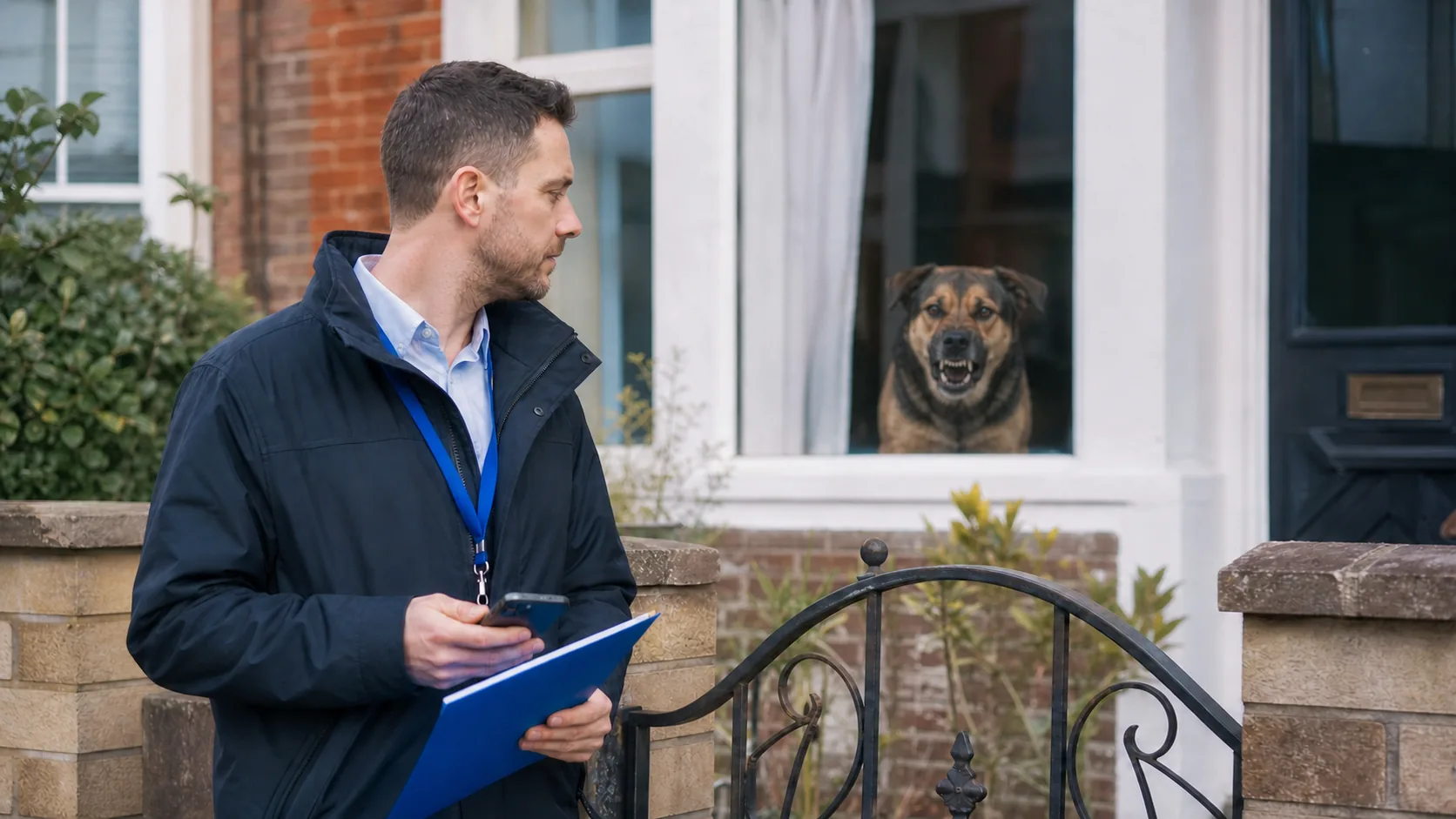
A man in a high-visibility jacket standing back from a gate with a dog behind it

At a glance

Audience
Housing officers, repairs teams, community workers, enforcement teams, and visiting staff.
Typical duration
Half day / full day
Group size
15 delegates included in the rate. Additional charge per delegate above 15. Absolute maximum 20. Smaller groups keep everyone involved in the discussion and scenario practice, which is where most of the learning happens.

Why the course matters

For staff entering homes, gardens or sites where dogs may be present

This course focuses on prevention for housing association and utilities staff entering homes, gardens or sites where dogs may be present: reading warning signs, planning visits, speaking with owners, using safer positioning and knowing what to do if risk increases. The Safety Hub guide on dog risk for visiting staff covers the same visits.

Who it is for

Built for the staff who face the risk

Delivery can be adapted around role, sector, incident history, and the confidence your organisation needs delegates to build.

Practical outcomes

Practical outcomes for safer decisions

Reading dog behaviour, safer body language and what to do when there is a dog at the property.

Course content

What delegates will work through

  • Read environmental and behavioural warning signs
  • Plan visits where dogs may be present
  • Use safer positioning and communication with owners
  • Know what to do before, during, and after an incident

Scenarios and practical application

Practical application

The course is designed to help staff recognise risk early, apply clear procedures, and make calm choices they can stand behind under pressure.

Lead time

Up to five weeks

Allow up to five weeks from confirmation to the first session. That depends on trainer availability and your own staff availability. The window is used to review your policies, build your reporting routes into the material, and give teams time to attend. Where a programme runs across several sessions, the full schedule is agreed up front so you can plan cover.

Delivery

In person or live online

In-house at your premises, or live online with a trainer. Both formats are tutor-led and cover the same content, discussion and scenario work.

Coverage

UK and Ireland in person, international online

In person across England, Wales, Scotland, Northern Ireland and the Republic of Ireland. Live online sessions can be delivered to teams anywhere in the world. Training is delivered in English, with live subtitles through Microsoft Teams or PowerPoint, which can translate captions into the delegate's own language. Where legislation differs across the UK and Ireland, we research the law that applies to you and build it into the material rather than delivering the England and Wales position by default.

Larger programmes

Rolled out across multiple sessions

Larger workforces are trained as a planned programme, not a single booking. The schedule is agreed at the start and worked around shift patterns and cover. Where travel is involved we will look at consecutive days. Half-day courses often run back to back, morning and afternoon on the same day, with a saving on the half-day rate. Sessions are delivered by associate trainers. We keep the same trainer where we can.

Cost

Quoted for each programme

We do not publish prices. Cost depends on group numbers, delivery format, travel, overnight accommodation where the location requires it, and how much bespoke design a programme needs. Any figure published here would be misleading.

Common questions about this course

Who needs Dangerous Dogs Awareness training?

It is useful for housing officers, repairs staff, enforcement teams, community workers, utilities staff, delivery or inspection teams and anyone entering homes, gardens, communal areas or outdoor sites where dogs may be present. It is particularly relevant where staff cannot choose the environment they are entering.

Does the course focus on prevention?

Yes. The main aim is preventing avoidable incidents. Delegates learn how to gather information before a visit, recognise environmental warning signs, assess owner behaviour, avoid escalating the dog, use safer positioning and decide when not to enter or when to withdraw.

Is this about dog handling or animal training?

No. This is not a dog-handling or animal behaviour qualification. It is practical safety awareness for workers who may encounter dogs while doing their job. The focus is on human decisions, communication with owners, body positioning, warning signs and incident response.

Can the training reflect our visit procedures?

Yes. The session can be shaped around appointment booking, pre-visit questions, warning markers, lone working procedures, refusal to enter, reporting routes and post-incident support. This makes it more useful than generic dog safety advice.

What do delegates receive?

Every delegate receives a certificate of attendance, a PDF copy of the certificate and PDF course handouts.


Course guidance

Free, maintained guidance from our Safety Hub on the subjects this course covers.

Discuss this course

Tell us what you need and we will quote for it.

Discuss this course