Safety Solutions TrainingSafety Solutions Training

Licensed premises

Conflict Management Training for Hospitality and Licensed Premises

Practical de-escalation for staff in pubs, bars, restaurants and other licensed premises who deal with refusal, intoxication and closing-time conflict.

Discuss this course
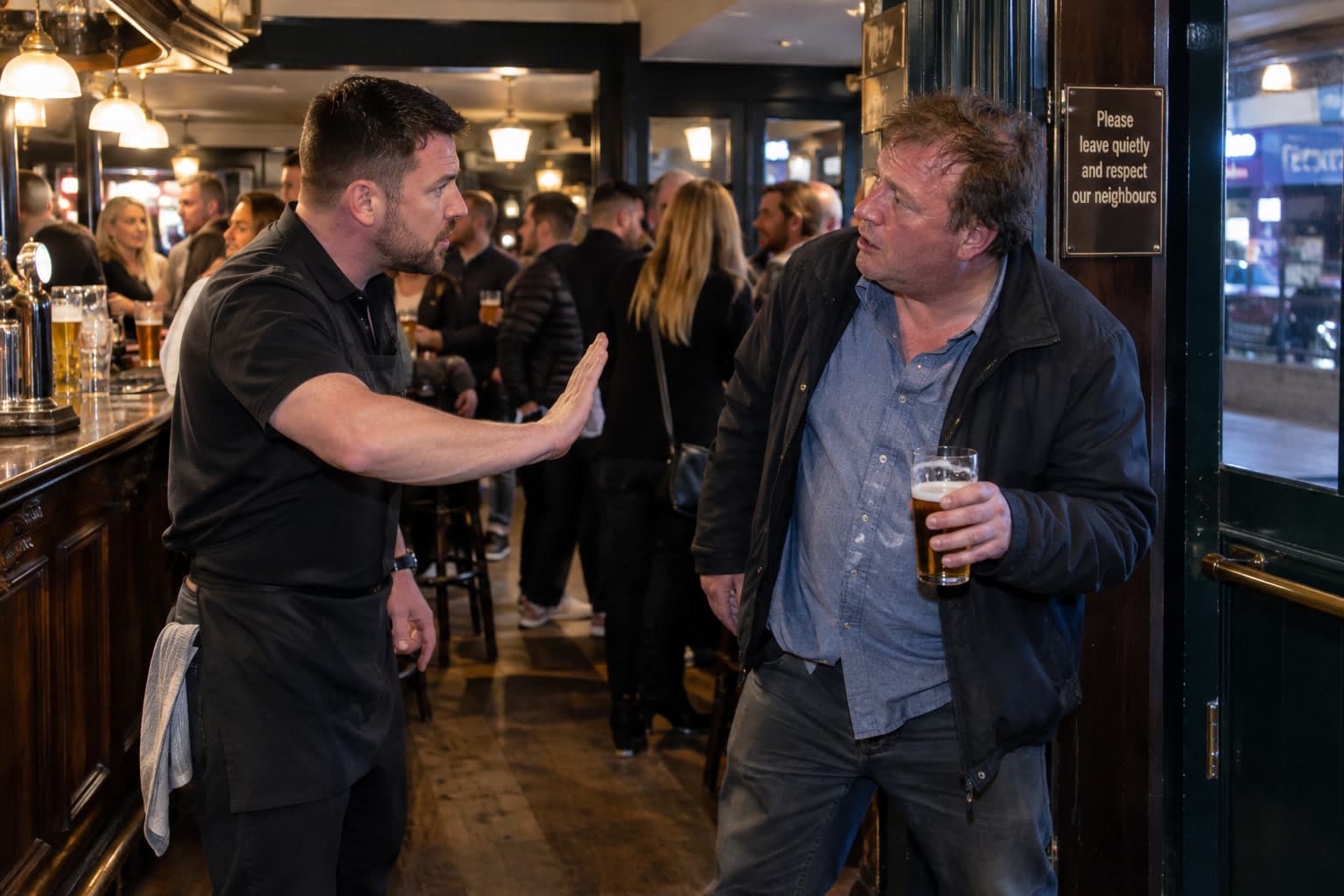
A member of bar staff asking a customer with a drink to stop at the door of a busy pub

At a glance

Audience
Bar staff, floor staff, supervisors and managers in pubs, bars, restaurants, hotels and other licensed premises.
Typical duration
Full day
Group size
Training is delivered to groups of up to 15 delegates, allowing everyone to participate in discussions and practical exercises. For larger teams, we can arrange additional sessions to suit your staffing requirements.

Why the course matters

For staff in premises licensed to sell alcohol who deal with the public

This course is tailored for hospitality venues and licensed premises where conflict frequently arises around intoxication, refusals of service, age checks, closing time, and abuse of staff. It equips personnel with calm, practical options they can use immediately on shift, alongside clear thresholds for when to call for help. The Safety Hub guidance on workplace violence and aggression covers the wider subject.

Who it is for

Built for the staff who face the risk

Delivery is tailored around your specific venue, incident history, and shift patterns, from busy weekend rushes to late-night trading and quiet periods with minimal backup.

Because front-line staff meet the problem first and supervisors are called when it grows, the training focuses on coordinated staff response, safe refusal, and clear post-incident reporting.

Course content

What delegates will work through

  • Spot early signs of frustration, intoxication, and rising tension before situations escalate.
  • Use professional spacing, tone of voice, and precise wording to keep encounters calm.
  • Handle refusals of service and age verifications without inflaming risk.
  • Manage decisions to ask someone to leave, including during busy closing times.
  • Establish clear thresholds for when lone bar or floor staff should call for help or step away.
  • Record incidents accurately so managers can spot patterns across shifts.

Scenarios and practical application

Practical application

Delegates work through high-pressure scenarios, including managing busy trade.

England and Wales

This is general information for England and Wales. It is not legal advice. Your premises licence, its conditions and your house rules still apply. Licensing law in Scotland and Northern Ireland is different.

Premises licence

A premises licence allows licensable activities at that site. For most hospitality venues, that includes the sale of alcohol. The licence holder is responsible for the premises. Conditions on the licence can limit how alcohol is sold and how the site is run.

Designated premises supervisor

Where the licence allows the sale of alcohol, it must name a designated premises supervisor who holds a personal licence. Alcohol must not be sold if there is no designated premises supervisor, or if their personal licence is missing or suspended. Every sale of alcohol must be made or authorised by a personal licence holder.

Licensing objectives

Licensing authorities carry out their functions with a view to promoting four objectives. They are the prevention of crime and disorder, public safety, the prevention of public nuisance, and the protection of children from harm.

Refusing service

Staff can refuse to sell alcohol. It is an offence to knowingly sell alcohol to a person who is drunk, or to attempt that sale, or to allow it, on relevant premises. That includes licensed premises. Keep the refusal calm and in line with house policy. Do not refuse someone because of a protected characteristic, such as race, sex or disability. Staff do not have a power to detain someone.

Asking someone to leave

A person who is drunk or disorderly commits an offence if, without a reasonable excuse, they fail to leave when asked by a police officer, the premises licence holder, the designated premises supervisor, or a member of staff whose role authorises that request. Coming back in after being told not to can also be an offence. Not every employee has that authority. It depends on their role.

Drunk and disorderly behaviour

It is an offence to be drunk and disorderly in a public place. A public place includes premises the public may enter at the time. That covers a pub, bar or similar venue while it is open to customers.

When to call the police

Staff do not have police powers. Call the police if someone will not leave, becomes violent, or a crime is taking place. A police officer who is asked by an authorised person at the premises must help to remove a person who is drunk or disorderly, and help to stop them coming back in.

The session explains these points in plain language so staff can apply them with judgement. It does not replace your licence conditions, your policies, or advice from your own solicitor.


Training Arrangements

In-house or live online

We deliver training at your premises or live through Microsoft Teams or Zoom. Sessions are led by experienced trainers and include discussion and practical exercises.

Planning your training

We agree dates with you and review your staff's roles, relevant policies and training requirements before delivery. Larger programmes can be arranged across several sessions.

Where we deliver

We provide in-house training throughout the UK and Republic of Ireland, alongside live online courses for organisations in different locations.

Course fees

We provide a quotation based on the training required, number of delegates, location and delivery arrangements.

Common Questions About This Course

Everything you need to know about course delivery, legal coverage, and practical outcomes for your staff.

Can the session reflect our house rules?

Yes. The most effective sessions integrate your exact escalation routes, reporting expectations, and site-specific challenges. Your house policies remain the standard, while the training builds staff confidence in applying them calmly under pressure.

What do delegates receive?

Every delegate receives a certificate of attendance, a PDF copy of the certificate and PDF course handouts.

Course Guidance

Free, maintained guidance from our Safety Hub covering the core subjects explored throughout this training.

Discuss this course

Tell us what you need and we will quote for it.

Discuss this course

Plan training around your staff and risks

Tell us about your staff roles, working environment and the situations your staff face. We will recommend the right training approach for your organisation.

Trusted by organisations across the UK for practical, scenario-led staff safety training.