

Covered here
Pre-entry questions, what to do at the threshold, a short legal geography reminder, and what to do after a bite. Enough to stop an unsafe visit continuing.
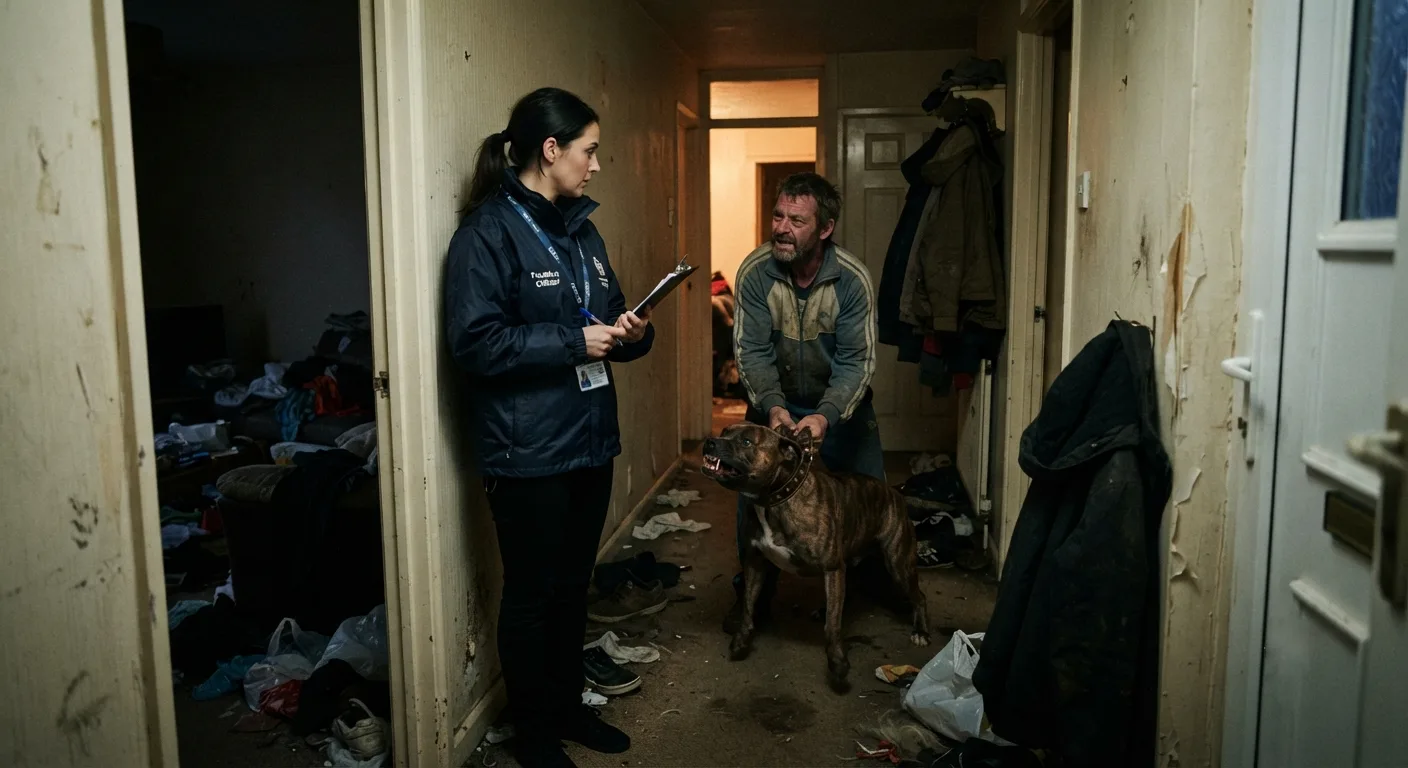
Housing, repairs, utilities, local authority, care, charity and community staff who knock on doors or work in other people's property. Managers who write visit procedures should start with the full guide.
The course title remains Dangerous Dogs Awareness. That is the training product. This Hub briefing uses dog risk, so visiting staff are not turned into dog handlers in the heading.
Pre-entry questions, what to do at the threshold, a short legal geography reminder, and what to do after a bite. Enough to stop an unsafe visit continuing.
This is not legal advice. It is not a kennels handling syllabus. It does not replace a risk assessment or a visit procedure. Statute detail, householder defence, 2026 exemption changes, public-area tactics and mid-visit arrivals sit in the full guide.
Dog-related risk is foreseeable for these roles. It belongs in visit planning and lone working arrangements, not as a surprise at the door.
Look and listen before you approach. Knock and step back so you can see the response and leave. If a dog is audible or visible, ask the resident to secure it and wait until you can see that it is secured. Do not accept a shout from inside while you are already stepping in.
Keep a route to the exit. Stay side-on rather than square-on. Do not stare, reach over a dog's head, or offer a hand to sniff if you are concerned. Withdraw if the dog is loose, the owner lacks control, or warning signs increase. Report the concern. Do not continue because the owner says the dog has never bitten.
Name the country you work in. Use the legislation guide for the statute map. Use the full guide for operational law. This paragraph is awareness only.
Under the Dangerous Dogs Act 1991, possession of a banned type is an offence. Assessment is by physical type, not registered breed. Section 3 covers a dog that is dangerously out of control. That offence applies to all dogs, including in the owner's home. Banned type is not the whole risk.
England and Wales onlyHouseholder defence does not protect lawful visitors. Housing officers, care workers and trades are not trespassers. The Dangerous Dogs (Exemption Schemes) (England and Wales) (Amendment) Order 2026, statutory instrument (SI) 2026/602, changed Certificate of Exemption conditions for banned types. It is not a duty for all dogs. Do not assume it applies in Scotland, Northern Ireland or Ireland.
Move to safety first. Arrange first aid and medical advice through the organisation's emergency and first-aid arrangements. This page does not give personal physical care advice. Report through workplace procedures. Preserve what happened while it is fresh. Near misses that future staff may meet at the same address belong in the same reporting route.
Welfare after the event sits in post-incident support for staff.
A briefing note is not the same as making a withdrawal decision with a dog three feet away.
Safety Solutions Training runs Dangerous Dogs Awareness as a half-day or full-day course. It is delivered by recently retired police dog handlers, or police with direct focused dog experience. Training does not replace a risk assessment, a visit procedure or a reporting system.
Official sources used for this page
Aligned to the full Hub guide on 31 August 2026. Next review 1 November 2026 with that guide. Not legal advice.
Practical insight and resources built from thirty years at the frontline.
Practical controls for violence, aggression, conflict, reporting and review.
Guidance for staff who work alone, visit, travel, or need check-in and escalation.
Abusive calls, repeated contact, boundary setting, records and escalation.
What non-specialist staff should notice, record in fact, and refer.
Gifts, over-familiarity, unofficial contact and pressure to bend the rules.
What to check before a visit, and what to do if a dog is present.
How scenario practice tests real workplace decisions without theatrical conflict.
Travel, walking and public transport. Written for employers to share with staff.
Tell us about your staff roles, working environment and the situations your staff face. We will recommend the right training approach for your organisation.
Trusted by organisations across the UK for practical, scenario-led staff safety training.