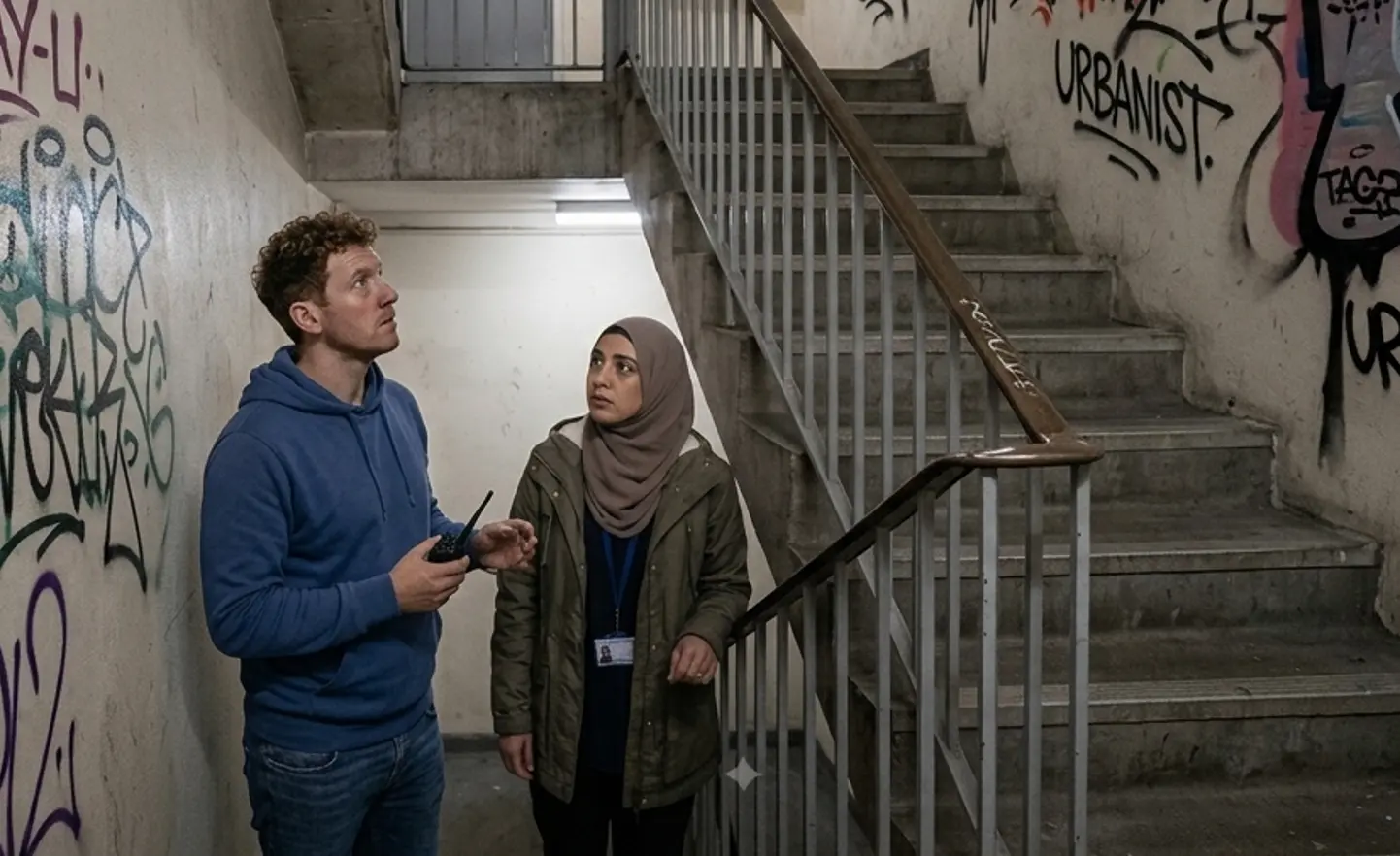
Who this is for
Read this if you decide how visiting and public-facing work is allowed to run. That usually means human resources, heads of housing, local authority and charity managers, care and support leads, and supervisors of housing officers, trades, care workers and enforcement staff.
This page is for the people who decide how visiting work is allowed to run. Leaders first. Permission to withdraw is an organisational control. It is not a personality test. Staff still need a prompt they can use under pressure. That prompt here is PAUSE. Write it so a manager can brief a team.
Typical readers work with people who enter homes, take calls, or hold a public space: housing officers, trades, care and support, outreach, reception and enforcement.
Covered here
What the organisation must already have. Planned assessment versus a live decision. A five-stage visit timeline. The PAUSE cycle. How to read the person, the environment and the task. Short role beats. How to choose, leave, record and learn.
Not covered here
This is not a replacement for the organisation's risk assessment. It is not a martial art. It is not investigation. It is not personal physical care. It is not a guarantee. It is not legal advice.
- Housing associations
- Local authority housing
- Care and support
- Charities
- Trades
- Enforcement and visiting staff
What the organisation must already have
In Great Britain, the Management of Health and Safety at Work Regulations 1999 require a suitable and sufficient risk assessment. The Health and Safety at Work etc. Act 1974 places an employer duty of care so far as is reasonably practicable. Those are the statutes.
Regulation 8 of the 1999 Regulations covers serious and imminent danger: stop work, and do not resume while it persists except the regulation's exceptional cases. That statute sits behind withdrawal. Dynamic risk assessment is how staff notice that the danger has arrived. It is not a separate Act.
If staff face detriment for leaving, or for refusing to return while the danger persists, the current right named here for Great Britain is the Employment Rights Act 1996, section 44. It applies in England, Wales and Scotland. It does not apply in Northern Ireland or Ireland. In Northern Ireland the equivalent is the Employment Rights (Northern Ireland) Order 1996 Article 68. Do not replace that with the Employment Rights Act 2025.
The Worker Protection (Amendment of Equality Act 2010) Act 2023 is reasonable steps to prevent sexual harassment of workers. It is not a general violence, lone-working or dynamic-assessment duty.
Safety Solutions Training treats dynamic risk assessment as how staff apply live conditions. It supports the employer duty. PAUSE is a practical prompt. It is not a legal test. The five-stage visit timeline below is operational interpretation. It is not a statute.
Before anyone uses PAUSE on a doorstep, the organisation needs lone-working arrangements, visit intelligence, a communication or alarm route, decision limits, and a culture that does not punish a withdrawal staff can stand behind. See the lone working cluster, the Lone Worker Safety Centre, personal safety devices and workplace violence and aggression.
- A suitable and sufficient assessment of foreseeable hazards, who may be harmed, and the controls required.
- Known history, staffing, location, exit options and access to help written into the visit or call plan.
- A named person monitoring lone workers, and a missed-contact trigger that actually runs.
- Written authority to delay, change, end or refuse an activity, and support after that decision.
IrelandResearch the client's framework. Do not export Great Britain wording as Irish statute. Northern Ireland also has its own arrangements.
Planned versus dynamic
Before work begins, the organisation should have identified foreseeable hazards, who may be harmed, the controls required and the circumstances in which work should not proceed. For a visit, call, enforcement decision or public-facing appointment, this may include known history, staffing, communication, location, exit options and access to help.
Dynamic assessment begins where that plan meets live conditions. It asks whether the assumptions and controls behind the plan are still valid. If the environment, behaviour, task or available support changes, the original decision may need to change as well.
Formal written assessments create the baseline. Dynamic assessment is the live process on site. It is not a second paperwork exercise completed in the hallway.
Manager testCan staff explain the conditions under which they may delay, change, end or refuse an activity, and what support they will receive after making that decision?
Five-stage visit timeline
On a field visit, staff move through five stages. Use PAUSE at each stage. The table is a planning aid. It is not mandated law, and it is not a default two-person rule.
| DRA stage | Key observational triggers | Action and control strategy |
|---|
| Stage 1: pre-arrival check | System warning flags, historical reports, task scope, time of day, weather and lighting. | Verify required controls, including a two-person visit where the assessment requires it. Log location and set a check-in on the personal safety device if that is the assessed control. Confirm the exit strategy. |
|---|
| Stage 2: arrival and parking | Vehicle positioning, road layout, outdoor lighting, unvetted groups outside, loose dogs. | Park facing an escape direction where it is safe and lawful to do so. Scan the exterior from inside the vehicle before opening doors. Torch in hand at night if that is the assessed control. |
|---|
| Stage 3: doorstep check | Occupant demeanour, signs of acute intoxication, hostility, aggressive animals inside, third parties. | Knock and step back. Do not cross the threshold if the occupant is volatile or an animal is unsecured. State the visit purpose clearly. |
|---|
| Stage 4: on-site execution | Changes in tone, rising agitation, blocking exit paths, brandishing objects, dark or unlit spaces. | Keep a line of sight to the exit. Do not work in a closed room if that blocks withdrawal. On two-person visits, separate who speaks from who works. |
|---|
| Stage 5: disengagement | Direct verbal threats, refusal to secure animals, physical boundary invasion, escalation. | Withdraw. Clear status with the manager or Alarm Receiving Centre. Log objective facts. In Great Britain, section 44 is the current detriment protection named here for leaving serious and imminent danger. |
|---|
Vehicle positioning is a safety control. The parking guidance on this page is Safety Solutions Training Ltd interpretation. It is not a statute.
Stages 1 and 2: before the door
- Check system markers. Never assume a lack of flags equals zero risk. Verify whether previous staff experienced verbal aggression or animal threats.
- Device check-in. Log the job and activate a timed check-in on your personal safety device before leaving the vehicle, if that is the assessed control. Devices support the plan. They do not replace it. See the Lone Worker Safety Centre.
- Parking. Prefer a well-lit position and reverse in so you can leave without a multi-point turn, where it is safe and lawful to do so.
Doorstep go or no-go
Stage 3 is the last chance to refuse entry before the threshold. Use PAUSE here. One sign is not a diagnosis. A pattern can still be a no-go.
Doorstep checklist
- Positioning. Stand back from the door frame. Turn slightly sideways so you keep balance and a route off the step.
- Demeanour scan. Observe stance, speech and whether there is evidence of severe intoxication or unpredictable agitation when the door opens.
- Animal rule. Ask for dogs or other animals to be secured in a separate closed room before you step inside. If the occupant refuses, end the visit. See dangerous dogs awareness for visiting and enforcement staff.
- Exit path. Confirm that hallways and doorways remain unobstructed by furniture, refuse or third parties.
Stages 4 and 5: inside, then out
Once inside a property, staff must keep continuous situational awareness:
- Exit in view.Position yourself closest to the room's exit. Let the occupant enter rooms ahead of you. Do not let anyone stand between you and the escape route.
- Recognise escalation. Swearing directed at you personally, clenched fists, invading personal space, or brandishing objects are indicators to leave.
- Safe withdrawal. Do not argue or attempt to win a debate. State a neutral reason for leaving where that helps you get out (for example, “I need to retrieve a component from my vehicle”), exit calmly, lock yourself in the vehicle, and drive to a safe location.
PAUSE
PAUSE is Safety Solutions Training's practical prompt. It slows a changing situation without turning the interaction into a complicated checklist. Do not rename it. It is not a statute. Use it at every stage of the visit timeline.
- 1 · Pause
Create time and distance
Create enough time and distance to think, where it is safe to do so. A step back, a pause in speech, or a move towards the exit can be enough. Do not invent time you no longer have.
- 2 · Assess
Scan what is in front of you
Scan behaviour, environment, task pressure, exits, other people and available support. Look at what you can observe. Do not rely only on instinct or a fixed script.
- 3 · Understand
Name the change
Identify what is different from the original plan and why it matters. Ask what the change did to exposure, and which planned control is now weaker or unavailable.
- 4 · Select
Choose an action
Continue, adapt, pause, withdraw, summon help or use the emergency procedure. Choose from the options you still have, not from the options you hoped to have.
- 5 · Explain and evidence
Communicate, then record
Communicate the decision when it is safe and appropriate. Then record the change, the action and the outcome. That record is for the organisation, not for blaming the worker with hindsight.
There are two clocks. Personal safety decisions are immediate. Recording and referral are the same day. They are not done in a doorway while the worker is trapped.
Person, environment, task
One sign is not a diagnosis. A raised voice may be frustration, distress, hearing difficulty or deliberate intimidation. Repeated questioning may be confusion. It may also be delay, control or a test of boundaries. Read the pattern, the context and the available controls. Do not attach certainty to one behaviour.
Useful observations include changes in tone or pace, fixation on one person or demand, closing distance, blocking movement, scanning for witnesses, sudden silence, intoxication, threats, reference to weapons, attempts to isolate staff, filming used to intimidate, or the arrival of additional people.
The environment can change the risk even if the person has not. Noise, crowding, poor lighting, a closed door, an obstructed exit, loss of phone signal, a failed alarm, a vehicle position, a dog entering the area or a colleague leaving can all reduce the worker's options.
- Maintain awareness of a safe route out. Do not stand where escape is blocked.
- Do not let task focus, paperwork or a screen remove awareness of the wider setting.
- Recheck whether the agreed communication or alarm route is available and trusted.
- Consider colleagues, service users, witnesses and anyone who may need assistance.
Watch for these mid-visit changes. Any one of them can make the original plan invalid.
Role beats
The cycle is the same. The pressure is not. These are short beats for a manager briefing, not new pages.
Housing officer
Arrears, antisocial behaviour and repairs complaints can turn quickly. Extra adults, a blocked door and filming are part of the same decision. They are not extras to deal with later. The housing-officer scenario below is the worked example.
Trades
The worker may have their back turned, be drilling, or be using rear access in an occupied home. Tools and noise hide movement behind them. Task focus must not remove awareness of the room, the dog, or the route out.
Care and support
Longer time in the home, occupant distress, and harder leave-taking. The service relationship is not a reason to stay once controls have failed. This page does not advise on personal physical care.
Welfare check
After a suicide disclosure or a police no-attend, dynamic assessment comes first. The check is not automatic. If the brief understated violence, treat that as a failed control. See safeguarding: noticing, recording and referring. Do not turn this page into a safeguarding manual.
Hostility in reception or a public area is still a live decision. Extra people, blocked exits and filming apply there too. Practise the skill in Conflict Management. That course is the practised application. It is not a synonym for dynamic risk assessment.
Challenging calls have their own guide. Do not copy that page here. See managing challenging phone calls. The same two clocks apply: stay safe on the call first. Record and refer the same day.
Hostility, a slammed door, or “nobody else is in” can be a safeguarding screen as well as a safety problem. Link the concern through the organisation's route. Staff safety still comes first.
Choose and leave
The aim is not to predict perfectly. It is to make the safest decision they can stand behind from the information and options available at the time.
- Continue when conditions remain within the assessed controls.
- Adapt by changing position, pace, communication, staffing or the way the service is delivered.
- Pause when more information, authority or support is needed before proceeding.
- Withdraw when controls have failed, risk is rising, or the worker cannot maintain a safe position.
- Seek urgent help when there is immediate danger, violence, a credible serious threat, or another emergency trigger in local procedures.
Worked scenario: a home visit changesA housing officer attends a planned visit. The original information identifies frustration about repairs but no known violence. On arrival, another adult is present, a large dog is loose, the hallway is narrow and the officer's phone has poor signal. During the discussion, the tenant begins filming, repeatedly blocks the route to the door and demands an immediate decision outside the officer's authority.
The relevant change is not simply that the tenant is angry. Several controls have weakened at once: communication is unreliable, movement is restricted, another person is present and the interaction is being used to apply pressure. A proportionate decision may be to stop the discussion, state that it cannot continue safely, move towards an exit without debating the recording, leave when able and follow the organisation's escalation and reporting procedure.
The same pattern can appear on a trades visit when the worker's back is turned, or on a welfare check when the brief understated who else would be in the home.
Commercial pressure, appointment targets, embarrassment or fear of criticism must not become reasons for remaining in an unsafe situation.
Record and learn
Staff judgement is weakened when procedures are vague, or when earlier decisions to withdraw have been criticised. Managers should turn dynamic assessment into an organisational control, not a personal resilience test.
- Define decision limits and escalation routes for the role.
- Give staff realistic authority to pause or withdraw, and reinforce it after use.
- Practise foreseeable scenarios using local procedures, equipment and communication routes.
- Ensure lone workers know who is monitoring, what missed contact triggers, and what happens after an alarm.
- Review near misses and changed conditions, not only injuries or formal complaints.
A useful record explains the circumstances, the change observed, the decision made, support requested and the outcome. It should identify any failed or missing control. It should avoid hindsight language that blames the worker for information they could not reasonably have known at the time.
- What was planned and what changed?
- Which warning signs or environmental factors mattered?
- Which control worked, failed or was unavailable?
- What immediate and follow-up action was taken?
- What must change in risk information, staffing, procedure, equipment, supervision or training?
A withdrawal, a near miss, or a welfare check that went wrong needs the post-incident support pathway. The manager's review should then consider why the risk information, visit plan, dog controls, communication route and authority limits did not prevent or reduce the exposure. The review should not focus only on whether the officer used the right words.
After a dynamic withdrawal, clear status with the manager or Alarm Receiving Centre and record an objective factual log. In Great Britain, leaving because of serious and imminent danger is a legitimate safety action. Section 44 is detriment protection. It is not a reporting form.
[DYNAMIC RISK ASSESSMENT AND WITHDRAWAL LOG]

1. VISIT AND WORKER DETAILS
   - Date and time:
   - Property address:
   - Visit type (for example repairs, inspection, tenancy visit or emergency):
   - Staff present (names, roles and lone worker device IDs if used):

2. DYNAMIC HAZARD OBSERVATIONS (factual descriptions only)
   - Behavioural indicators (for example occupant shouted, clenched fists, exact quotes):
   - Environmental or physical hazards (for example unlit exit path, unsecured aggressive dog):
   - Substance or impairment cues (for example visible intoxication, drug paraphernalia):

3. IMMEDIATE CONTROL AND WITHDRAWAL ACTION
   - DRA stage triggered (for example doorstep no-go or on-site escalation):
   - Time site exited:
   - Safe location reached and ARC or line manager cleared (time and name):

4. SYSTEM MARKER AND RISK REVIEW
   - Organisational warning marker added or updated (marker level and date):
   - Follow-up requirement (for example two-person visit if assessed):

5. OWNED NEXT STEP (to be assigned by the line manager)
   - Action owner:
   - Revised approach:
What this is not
This is not a replacement for the organisation's risk assessment. It is not a martial art. It is not investigation. It is not personal physical care. It is not a guarantee. It is not legal advice. It does not transfer the employer's responsibility for foreseeable risk to the worker.
Training
Dynamic risk assessment is the live decision. Conflict Management is the practised skill that sits under it. They are not the same thing.
Training does not replace a suitable and sufficient assessment, lone-working arrangements, or written permission to withdraw.
Official sources used for this page
Published 12 December 2024. Source check 4 September 2026. Next review 31 October 2026, or sooner if the Health and Safety Executive or the Management of Health and Safety at Work Regulations 1999 change. Not legal advice.