

Statutory context
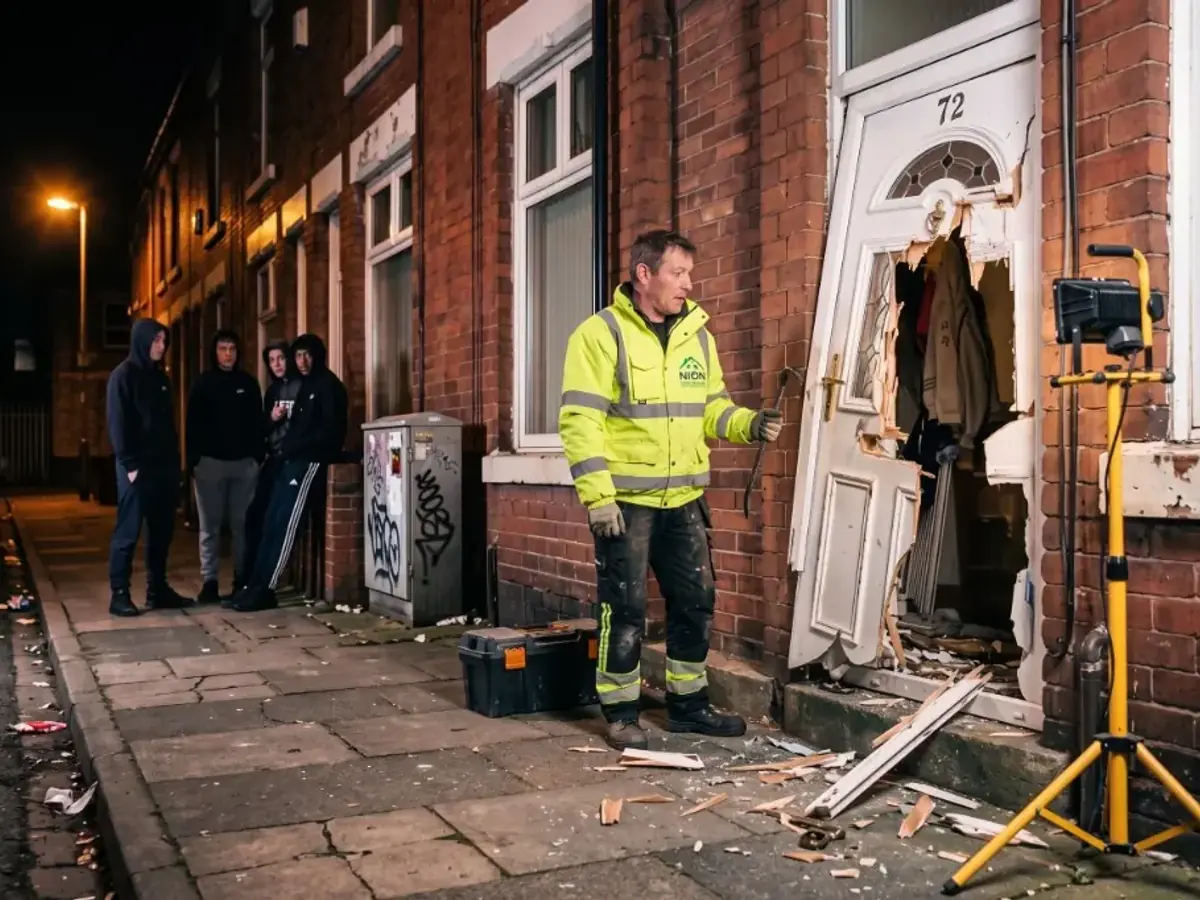
Out-of-hours emergencies create tension between rapid hazard resolution and protecting standby staff working alone at night. Darkness, fewer witnesses, slower backup and tired decision-making change the risk picture. The visitor does not resolve that tension on the doorstep.
Staff safety and lone working
- Out-of-hours attendance is still work under health and safety law. The Health and Safety at Work etc. Act 1974, section 2, and the Management of Health and Safety at Work Regulations 1999 are staff-safety law for Great Britain. An emergency job sheet does not cancel them.
- Regulation 3 requires a suitable and sufficient assessment. Regulation 8 covers serious and imminent danger: stop work, and do not resume while it persists except the regulation's exceptional cases. That statute sits behind withdrawal. It is not a two-person rule.
- If staff face detriment for leaving, or for refusing to return while the danger persists, the current right named here for Great Britain is the Employment Rights Act 1996, section 44. It applies in England, Wales and Scotland. It does not apply in Northern Ireland or Ireland. In Northern Ireland the equivalent is the Employment Rights (Northern Ireland) Order 1996 Article 68. Do not replace that with the Employment Rights Act 2025.
- In Northern Ireland, employer duties also sit under the Health and Safety at Work (Northern Ireland) Order 1978 Article 4 and the Management of Health and Safety at Work Regulations (Northern Ireland) 2000 regulations 3 and 8.
- In Ireland, the Safety, Health and Welfare at Work Act 2005 sections 11 and 27 sit behind emergency procedures and protection against penalisation for leaving or refusing to return where serious and imminent danger persists. An Garda Síochána is the police service. Emergency numbers are 999 or 112.
- There is no standalone UK lone-working Act. See the Lone Worker Safety Centre.
- The Worker Protection (Amendment of Equality Act 2010) Act 2023 is reasonable steps to prevent sexual harassment of workers. It is not a general violence or lone-working duty.
- Coming into forceEmployment Rights Act 2025 all reasonable steps and third-party harassment liability are planned for 30 October 2026. They are not current law.
Withdrawal can be the right outcome. A withdrawn night job still needs an owned next step before the shift ends. That next step is not “send the same lone operative back at 02:00”.
Housing repair urgency does not require the job finished that hour if staff cannot work safely. Health and safety law does not forbid all night visits at marked properties. Design the visit. See the legislation guide for statutes in more depth. This page is not legal advice.
Triage matrix
Safe out-of-hours call-outs begin at call handling. Screen every request against warning markers before dispatch. The levels below are a planning aid. They are not a statute and they are not a default two-person rule.
| Risk category | Example triggers | Planned dispatch controls |
|---|---|---|
| Level 1: standard emergency | Routine containment repair, no warning markers, calm caller. | Solo standby dispatch where the assessment allows it. Log the visit on a personal safety device or the organisation's monitoring route before leaving, if that is the assessed control. |
| Level 2: heightened risk | Caller agitated, background argument, unsecured dogs, or a minor anti-social behaviour marker. | Planned check-in before entry. Exterior scan on arrival. Pre-agreed dog containment. See dangerous dogs awareness. |
| Level 3: high risk or threat marker | History of physical aggression, weapons marker, acute intoxication, or an active domestic dispute. | No solo dispatch where the assessment says two people. Plan a two-person team, or defer until morning if the hazard can be contained from outside. |
| Level 4: critical danger | Active violent incident, severe mental health siege, or extreme physical threat. | Do not dispatch trade staff. Call 999. External containment only from a safe distance if it is safe to do so. |
That is not a universal buddy rule. The Health and Safety Executive extra-person list is high-risk technical work. It is not a default second person for every night call-out. Night and lone working do raise vulnerability. Design for that.
Before the van leaves
This ownership split is Safety Solutions Training Ltd interpretation. It is not a statute. Name the visit owner for the out-of-hours shift. That is not the operative alone. Name who may delay, change, escalate or stop the job overnight. If contractors are used overnight, name who owns their visit design and who they escalate to. Do not leave ownership as “whoever answered the phone”.
Check these before anyone is dispatched:
- System markers. Call handlers must tell the operative about violent history, mental health crises or dangerous animals before dispatch.
- Job type. Can it wait until a designed daylight visit? Can the hazard be isolated from an external meter box or stopcock without entering the living space?
- Backup and check-in. Who is available, how far away, and how they are contacted. Interval, missed-check-in action, and who monitors it.
- Device logging. Activate a timed check-in on the allocated personal safety device or smartphone monitoring app before starting the journey, if a device is the assessed control. A device does not replace named backup.
- Two-person controls. If the risk assessment says two people at night, and only one person is available, do not start. Emergency repair deadlines do not override the planned control.
Arrival and parking
Vehicle positioning at night is a safety control. The parking rules below are Safety Solutions Training Ltd interpretation. They are not a statute.
Night-time parking and arrival rules
- Face the escape route. Park so you can leave quickly. Do not nose into a dead-end driveway or a narrow alley where the vehicle can be blocked in.
- Use lighting where you can. Prefer street lighting. Avoid dark, unlit blind spots or unmonitored rear courtyards.
- Scan before you leave the vehicle. Look for crowds, open alcohol, loose dogs, or an unlit path to the door.
- Torch and device ready. Have a torch and the personal safety device in hand before stepping out, if those are the assessed controls. Use dynamic risk assessment continuously.
On the door
When approaching the front door at night, check these before crossing the threshold:
- Knock and step back. Stand back from the doorway in view of street lighting or a porch light. Do not stand directly in front of door glass.
- Occupant demeanour. If the occupant shows acute intoxication, unpredictable agitation or hostile body language, do not enter.
- Animal containment. Require dogs to be locked in a separate room before entering with tools.
- A step back, a pause or leaving is enough. Do not test whether the marker was overstated because “it is only a leak”. Prefer a clear exit. Do not be drawn into secondary rooms for a non-essential chat at night.
- Do not block someone in a room to finish a night repair. Staff must not close a person in.
Who speaks, who works
This split is Safety Solutions Training Ltd interpretation. It is not a statute.
- The person doing the work should not also manage the occupant's anger, anti-social behaviour or an access dispute alone at 01:00 if the plan named a second role.
- If a two-person team attends, the trade operative focuses on the repair or isolation. The second officer manages communication and the exit.
- If the communication owner is not there, redesign the job. Postpone to a managed daylight visit if that is the safe option.
Electrical work
- Electrical work sits under the Electricity at Work Regulations 1989.
- Isolation needs competence. Prove dead.
- Isolation from outside the living space is Safety Solutions Training Ltd interpretation only where it is lawful, competent and accessible.
- It is not punitive. It is not a duty to isolate. This page does not give a gas isolation method.
- Operatives must not attempt delicate isolations while subjected to verbal abuse.
Withdrawal
Leave when:
- serious and imminent danger is present or reasonably believed
- aggression is escalating and de-escalation is not working
- weapons, credible threats, blocked exits or aggressive dogs appear
- backup or check-in fails and the plan said that means withdraw
- the planned night controls are not in place
Stop. Make yourself safe. Return to the vehicle, lock the doors, and drive to a safe location. Clear your status with the duty manager or monitoring centre. Do not negotiate a second entry the same night without a new owned plan. In Great Britain, planned withdrawal sits under Regulation 8 of the Management of Health and Safety at Work Regulations 1999 and section 44 of the Employment Rights Act 1996.
Police and mental health
- Wales
- Welsh police, and police community support officers where the force uses them. 999.
- England
- Police and police community support officers. 999.
- Scotland
- Police Scotland. 999. Not PCSO.
- Northern Ireland
- Police Service of Northern Ireland. 999. Not PCSO.
- Ireland
- An Garda Síochána. 999 or 112. Not UK police.
- Other police or community officer attendance is requested, not guaranteed.
- Call 999 for immediate danger or a crime in progress. In Ireland that is 999 or 112.
- Right Care, Right Person is an operating model used by some forces in England and Wales. It is not a statute. It does not make police attendance automatic. Do not copy it to Scotland, Northern Ireland or Ireland as if it were law there. Night mental-health presentations still need your organisation's escalation route.
Urgent repairs and repair clocks
For England and Wales repair clocks, prescribed hazards and the wider urgent-repairs design, use: Urgent repairs at high-risk properties.
The Hazards in Social Housing (Prescribed Requirements) (England) Regulations 2025 sit on the urgent-repairs page. Those clocks do not authorise unsafe night entry. Coming into forcePhase 2 from 30 November 2026 is not a current duty today. Wales uses Renting Homes (Wales) Act 2016 sections 91, 92 and 97 in reasonable time after the landlord is aware. That is not an English clock and it is not a right to exclude the occupier into a hostile room.
After the visit
Make people safe first. See post-incident support for welfare after a distressing visit. Tell the named night visit owner before the shift ends. Tell the day repairs or neighbourhood owner if the job must be redesigned at first light.
Name an owned next step before the night shift ends (standby make-safe from outside, daylight two-person return, legal or neighbourhood hand-off). Do not send the same lone worker back because the leak is worse, without a new plan.
Record facts only:
- what was planned for the night dispatch
- what backup and check-in were in place
- what changed on arrival
- what was decided
- who was told
- what happens next, and who owns it at first light
This is not a court-evidence manual. It does not decide liability in a particular case. Housing systems can use a standard log of this kind:
[OUT-OF-HOURS EMERGENCY CALL-OUT INCIDENT / WITHDRAWAL REPORT]

1. CALL-OUT DETAILS
   - Date and time of call-out:
   - Property address:
   - Job reference and hazard description (for example, major burst pipe or total power loss):
   - Standby operative name(s) and device IDs:

2. HAZARD / INCIDENT OBSERVED (objective factual details)
   - Hostile behaviour (for example, physical threats, severe intoxication, exact quotes):
   - Environmental or lone working hazards (for example, unlit communal area, loose aggressive dogs):
   - Safety device actions (for example, timed check-in missed, SOS activated):

3. IMMEDIATE ACTION AND WITHDRAWAL
   - Time property exited or call-out aborted:
   - Safe location reached and duty manager or monitoring centre cleared (time and name):
   - Hazard containment status (for example, water isolated externally at street valve, or uncontained):

4. MULTI-AGENCY AND EMERGENCY FOLLOW-UP
   - Police attendance requested? (Yes / No, and incident reference if known):
   - System warning marker added or updated on housing database (date and initials):

5. OWNED NEXT STEP (to be completed by duty or repairs manager within 2 hours)
   - Assigned action owner:
   - Alternative morning access plan or managed two-person re-visit:
Related training
Practise communication, withdrawal and reporting in Conflict Management and Lone Worker Safety on housing association visits. A course does not replace the visit plan, withdrawal authority, or an owned next step after a job is stopped.
Official sources used for this page
- Health and Safety at Work etc. Act 1974, section 2 opens in a new tab
- Management of Health and Safety at Work Regulations 1999, regulation 3 opens in a new tab
- Management of Health and Safety at Work Regulations 1999, regulation 8 opens in a new tab
- Employment Rights Act 1996, section 44 opens in a new tab
- Employment Rights (Northern Ireland) Order 1996, Article 68 opens in a new tab
- Health and Safety at Work (Northern Ireland) Order 1978, Article 4 opens in a new tab
- Management of Health and Safety at Work Regulations (Northern Ireland) 2000, regulation 3 opens in a new tab
- Management of Health and Safety at Work Regulations (Northern Ireland) 2000, regulation 8 opens in a new tab
- Safety, Health and Welfare at Work Act 2005, section 11 opens in a new tab
- Safety, Health and Welfare at Work Act 2005, section 27 opens in a new tab
- Health and Safety Executive: Violence and aggression at work opens in a new tab
- Health and Safety Executive: Protecting lone workers opens in a new tab
- Health and Safety Executive: Lone working and violence opens in a new tab
- Health and Safety Executive for Northern Ireland: Protecting your workers from violence and aggression opens in a new tab
- Health and Safety Authority (Ireland): Violence and aggression opens in a new tab
- Guidance on Managing the Risk of Work-Related Violence and Aggression (2024) opens in a new tab
- Urgent repairs at high-risk properties
Published 3 September 2026. Updated 4 September 2026.
This page is guidance from Safety Solutions Training Ltd. It is not legal advice. Safety Solutions Training Ltd is not a solicitor and does not act as your lawyer.
It is not a substitute for your organisation's own procedures, risk assessment, or competent advice on your facts. It does not decide liability in a particular case.
The law changes. A source-check date is not a promise that every later change has been caught. On the day you rely on this page, check the named statute, regulations and official sources. For UK law start with legislation.gov.uk. For the Republic of Ireland start with the Irish revised Acts. Follow the regulator named on this page.
Duties on this page apply only in the nations named here. Do not copy England or Wales wording onto Scotland, Northern Ireland or Ireland unless this page says that duty extends there.
Source check 3 September 2026. Next review 28 October 2026, or sooner if the named official sources change. Not legal advice.
Safety Hub
Practical insight and resources built from thirty years at the frontline.
Workplace violence and aggression
Practical controls for violence, aggression, conflict, reporting and review.
Lone Worker Safety Centre
Guidance for staff who work alone, visit, travel, or need check-in and escalation.
Managing challenging phone calls
Abusive calls, repeated contact, boundary setting, records and escalation.
Notice, record and refer
What non-specialist staff should notice, record in fact, and refer.
Recognising boundary drift
Gifts, over-familiarity, unofficial contact and pressure to bend the rules.
Dog risk for visiting staff
What to check before a visit, and what to do if a dog is present.
Why live practice matters
How scenario practice tests real workplace decisions without theatrical conflict.
Personal safety away from the workplace
Travel, walking and public transport. Written for employers to share with staff.
Plan training around your staff and risks
Tell us about your staff roles, working environment and the situations your staff face. We will recommend the right training approach for your organisation.
Trusted by organisations across the UK for practical, scenario-led staff safety training.