

Statutory context
Showing prospective tenants around properties, completing allocations, and inspecting empty homes all sit under staff-safety law. Re-let targets must not override worker protection. The visitor does not resolve that tension on the doorstep.
Staff safety and lone working
- A void, an unallocated dwelling or a pre-lettings viewing is still work. It still needs a suitable risk assessment. Do not invent a duty that voids are always safe.
- The Health and Safety at Work etc. Act 1974, section 2, and the Management of Health and Safety at Work Regulations 1999 are staff-safety law for Great Britain. Void targets do not cancel them.
- Regulation 3 requires a suitable and sufficient assessment. Regulation 8 covers serious and imminent danger: stop work, and do not resume while it persists except the regulation's exceptional cases. That statute sits behind withdrawal. It is not a two-person rule.
- If staff face detriment for leaving, or for refusing to return while the danger persists, the current right named here for Great Britain is the Employment Rights Act 1996, section 44. It applies in England, Wales and Scotland. It does not apply in Northern Ireland or Ireland. In Northern Ireland the equivalent is the Employment Rights (Northern Ireland) Order 1996 Article 68. Do not replace that with the Employment Rights Act 2025.
- In Northern Ireland, employer duties also sit under the Health and Safety at Work (Northern Ireland) Order 1978 Article 4 and the Management of Health and Safety at Work Regulations (Northern Ireland) 2000 regulations 3 and 8.
- In Ireland, the Safety, Health and Welfare at Work Act 2005 sections 11 and 27 sit behind emergency procedures and protection against penalisation for leaving or refusing to return where serious and imminent danger persists. An Garda Síochána is the police service. Emergency numbers are 999 or 112.
- There is no standalone UK lone-working Act. Lone working is how the employer discharges the duties already named here. See the Lone Worker Safety Centre.
- Lone lettings viewings with prospective tenants are not automatically low risk. New people, family members and unknown associates can arrive. Keys create access. Access creates exposure.
- The Worker Protection (Amendment of Equality Act 2010) Act 2023 is reasonable steps to prevent sexual harassment of workers. It is not a general violence or lone-working duty.
- Coming into forceEmployment Rights Act 2025 all reasonable steps and third-party harassment liability are planned for 30 October 2026. They are not current law.
Withdrawal can be the right outcome. A withdrawn viewing or void inspection still needs an owned next step the same day. That next step is not “go back in alone because the key is already out”.
Housing operational targets do not require the visit finished that hour if staff cannot work safely. Health and safety law does not forbid all void or lettings visits. Design the visit. See the legislation guide for statutes in more depth. This page is not legal advice.
Risk matrix
Risk changes depending on whether staff are showing applicants around, completing a sign-up, or entering an unverified empty property. The phases below are a planning aid. They are not a statute and they are not a default two-person rule.
| Operational phase | Key hazard factors | Planned lone working controls |
|---|---|---|
| Phase 1: accompanied viewing | Applicant anxiety, accompanying friends or family showing hostility, lone working in empty properties. | Pre-viewing applicant background check. Active timer on a personal safety device, if that is the assessed control. Officer stays closest to the exit. No closed rooms. |
| Phase 2: allocation and sign-up | Disputes over property condition, refusal of terms, unexpected rent demands, volatile emotional reactions. | Prefer sign-ups in a secure office. If completed on site, plan a second officer or supervisor where hostility is known. Do not improvise a solo sign-up against warning markers. |
| Phase 3: initial void key entry | Unverified voids, possible squatters, unauthorised occupants, unsecured animals, biohazards. | Plan two-person entry for the first inspection where the assessment says so. Exterior scan before entry. Knock and announce before unlocking. This is not a default buddy rule for every later visit. |
| Phase 4: technical void survey | Structural defects, exposed wiring, gas leaks, unlit spaces, poor mobile signal. | Torch, pre-agreed check-in, and external isolation checks before entry. Do not enter unlit basements or areas without mobile signal alone if the plan depends on that contact. |
That is not a universal buddy rule. The Health and Safety Executive extra-person list is high-risk technical work. It is not a default second person for every void or viewing.
Accompanied viewings
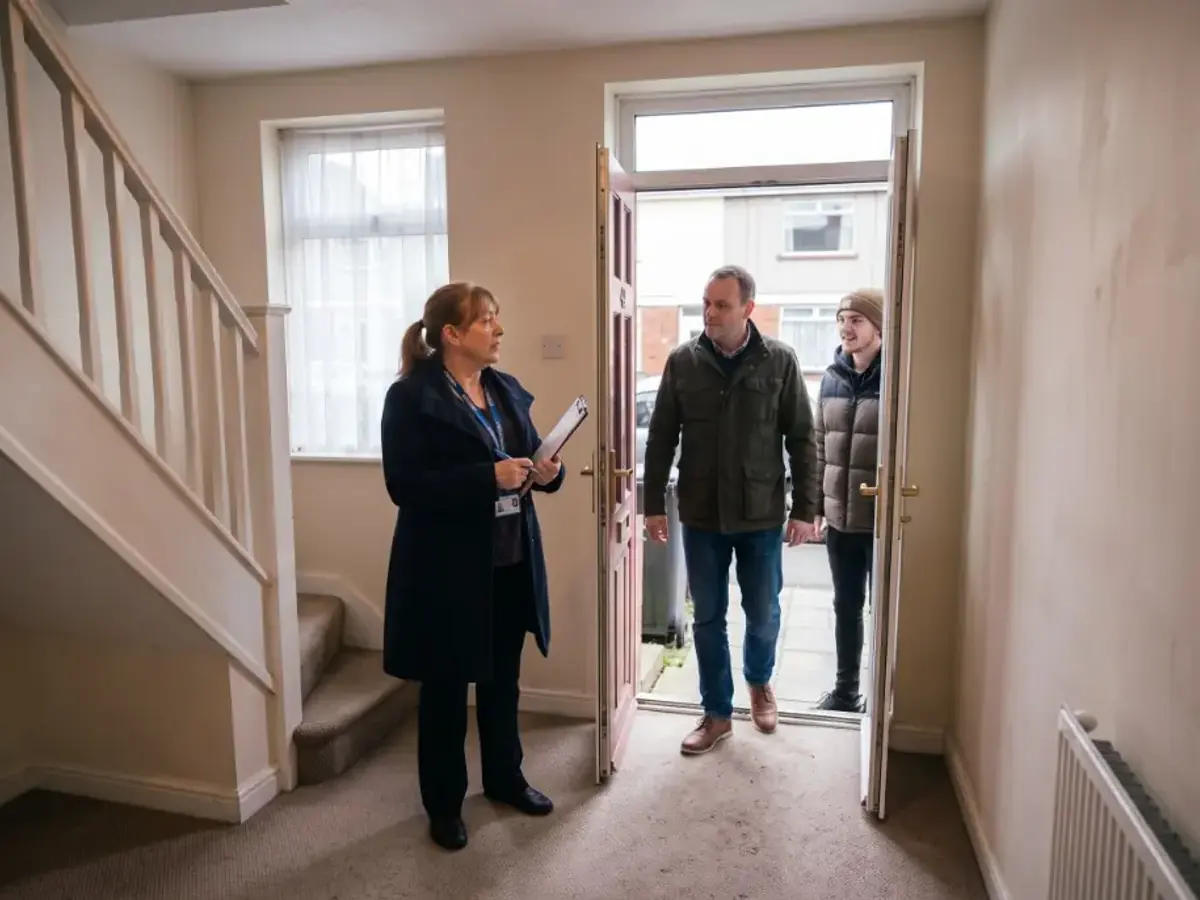
Accompanied viewings present distinct lone working risks because officers guide members of the public into empty buildings. See the Lone Worker Safety Centre for the wider control picture.
Lone working viewing and doorstep checklist
- Pre-meeting intelligence. Check warning databases for the applicant and any named accompanying visitors before meeting on site.
- Device countdown. Log the visit location and set an active timed check-in on your personal safety device before approaching the entrance, if a device is the assessed control. A device does not replace the visit plan.
- Dynamic assessment on arrival. Use dynamic risk assessment when you meet the applicant. Look for acute intoxication, unpredictable agitation, or extra unvetted group members.
- Keep the exit. Let prospective tenants and guests walk into rooms ahead of you. Never allow an applicant to stand between you and the exit.
- No closed room. Keep internal doors open while showing rooms. Do not lead applicants into confined spaces such as small cellars, walk-in wardrobes or narrow utility rooms. Staff must not close a person in to finish paperwork.
- Lone viewings with unknown applicants need a planned check-in and a named backup.
- Prefer meeting points, limited rooms, and a clear end time when risk is elevated.
- Do not stay for an open-ended tour because the applicant “wants to see everything” when the dynamic risk says leave.
- If a second person was the control and they cancel, redesign. Do not improvise a lone visit against the assessment.
Allocations and sign-ups
Allocations and sign-up meetings can raise acute stress, particularly if applicants are disappointed by property conditions or disagree with tenancy terms.
- Prefer office sign-ups. Conduct formal contract sign-ups and key handovers in a secure office with safety controls where possible.
- On-site sign-up controls. If a sign-up must occur at the property, ensure a second officer or supervisor is present if hostility or volatility has been identified.
- Allocation refusals. If an applicant becomes hostile about allocation decisions or property condition, state the formal procedure calmly, disengage, and do not enter a prolonged argument on site. Use the device discreetly if you feel threatened and that is the assessed control.
Void inspections
Inspecting an empty property needs caution. Void addresses can conceal structural hazards, unauthorised occupants or biohazards. Unknown occupancy, squatters, former occupants returning, visitors, contractors and dogs can all change the picture after the keys leave the office.
- Former property history. Check whether the void was repossessed after severe anti-social behaviour, illegal drug activity or violence. Former associates may still try to access the address.
- Keys. Keys are a control and a risk. Know who holds them, how many sets are out, and whether locks have been changed. This split is Safety Solutions Training Ltd interpretation. It is not a statute.
- If someone else may already be inside, treat that as a foreseeable violence and aggression risk until assessed. This page does not create a duty to clear squatters. Unlawful occupation is a legal and neighbourhood hand-off, not a lone lettings task.
- Exterior scan and knock first. Check for signs of forced entry or broken windows. Knock firmly and announce your presence before turning the key, even if the property is logged as void.
- Do not test whether the “empty” label was right by pushing into a dark property alone when signs of occupation appear. Signs of occupation, forced doors, unexpected people, or aggressive animals are reasons to stop and replan, not reasons to “have a quick look”.
- Sharps and biohazards.Never insert hands into unseen areas such as high cupboards, cisterns or discarded refuse. Use a torch to inspect dark rooms. Carry a sharps disposal kit if that is your organisation's control.
- Mobile signal. Test reception before going beyond the front door. If signal is lost inside, do not proceed alone without an external check-in protocol. See lone worker safety controls.
- See dangerous dogs awareness for animals left behind or brought by viewers.
If the property was expected empty and is not, withdraw, secure what you can without confrontation, and escalate to the visit owner.
Withdrawal
Leave when:
- serious and imminent danger is present or reasonably believed
- aggression is escalating and de-escalation is not working
- unexpected occupants, weapons, blocked exits or aggressive dogs appear
- the planned controls are not in place
- you lose contact with the check-in person and the plan said that means withdraw
Stop. Make yourself safe. Do not finish the void sheet “while you are there” against that picture. In Great Britain, planned withdrawal sits under Regulation 8 of the Management of Health and Safety at Work Regulations 1999 and section 44 of the Employment Rights Act 1996.
Police and mental health
- Wales
- Welsh police, and police community support officers where the force uses them. 999.
- England
- Police and police community support officers. 999.
- Scotland
- Police Scotland. 999. Not PCSO.
- Northern Ireland
- Police Service of Northern Ireland. 999. Not PCSO.
- Ireland
- An Garda Síochána. 999 or 112. Not UK police.
- Other police or community officer attendance is requested, not guaranteed.
- Call 999 for immediate danger or a crime in progress. In Ireland that is 999 or 112.
- Right Care, Right Person is an operating model used by some forces in England and Wales. It is not a statute. It does not make police attendance automatic. Do not copy it to Scotland, Northern Ireland or Ireland as if it were law there.
After the visit
Make people safe first. Confirm safe clearance through your lone worker monitoring system or line manager. See post-incident support for welfare after a distressing visit.
Tell the named visit owner the same day. Tell voids, allocations or lettings owners if re-letting, lock changes or contractor access must pause. Name an owned next step the same day. Do not send the same lone worker back because the void days are rising, without a new plan.
Record facts only:
- what was planned
- what the property condition and occupancy signs were
- what changed
- what was decided
- who was told
- what happens next, and who owns it
- key and lock actions taken or requested
This is not a court-evidence manual. It does not decide liability in a particular case. Housing systems can use a standard log of this kind:
[LETTINGS, VOID AND LONE WORKER INCIDENT / WITHDRAWAL REPORT]

1. VISIT DETAILS
   - Date and time:
   - Property address:
   - Visit type (for example, accompanied viewing, tenancy sign-up, or initial void inspection):
   - Staff present (names, roles and lone worker device IDs):

2. HAZARD / INCIDENT OBSERVED (objective facts only)
   - Hostile behaviour (for example, threats from applicant or associates, exact quotes used):
   - Environmental hazards (for example, biohazards, hypodermic needles, structural defects):
   - Unauthorised occupancy (for example, evidence of squatting, active trespassers):
   - Lone working factors (for example, mobile blackspot, device alarm activated):

3. IMMEDIATE ACTION TAKEN
   - Time viewing aborted or property exited:
   - Safe location reached and lone worker monitoring system cleared (time and name):
   - Property security status upon departure (for example, secured, key safe locked):
   - Line manager or lettings lead notified (time and name):

4. FOLLOW-UP AND SYSTEM UPDATE
   - System warning marker added or updated for applicant or property (date and initials):
   - Specialist contractor required? (for example, needle sweep, lock change, re-securing):

5. OWNED NEXT STEP (to be assigned by lettings or void manager within 2 hours)
   - Action owner:
   - Revised approach (for example, office sign-up, two-person viewing, police accompaniment):
Related training
Practise communication, withdrawal and reporting in Conflict Management and Lone Worker Safety on housing association visits. A course does not replace the visit plan, withdrawal authority, or an owned next step after a visit is stopped.
Official sources used for this page
- Health and Safety at Work etc. Act 1974, section 2 opens in a new tab
- Management of Health and Safety at Work Regulations 1999, regulation 3 opens in a new tab
- Management of Health and Safety at Work Regulations 1999, regulation 8 opens in a new tab
- Employment Rights Act 1996, section 44 opens in a new tab
- Employment Rights (Northern Ireland) Order 1996, Article 68 opens in a new tab
- Health and Safety at Work (Northern Ireland) Order 1978, Article 4 opens in a new tab
- Management of Health and Safety at Work Regulations (Northern Ireland) 2000, regulation 3 opens in a new tab
- Management of Health and Safety at Work Regulations (Northern Ireland) 2000, regulation 8 opens in a new tab
- Safety, Health and Welfare at Work Act 2005, section 11 opens in a new tab
- Safety, Health and Welfare at Work Act 2005, section 27 opens in a new tab
- Health and Safety Executive: Violence and aggression at work opens in a new tab
- Health and Safety Executive: Protecting lone workers opens in a new tab
- Health and Safety Executive: Manage the risks of working alone opens in a new tab
- Health and Safety Executive for Northern Ireland: Protecting your workers from violence and aggression opens in a new tab
- Health and Safety Authority (Ireland): Violence and aggression opens in a new tab
- Health and Safety Authority (Ireland): Guidance on Managing the Risk of Work-Related Violence and Aggression opens in a new tab
Published 3 September 2026. Updated 4 September 2026.
This page is guidance from Safety Solutions Training Ltd. It is not legal advice. Safety Solutions Training Ltd is not a solicitor and does not act as your lawyer.
It is not a substitute for your organisation's own procedures, risk assessment, or competent advice on your facts. It does not decide liability in a particular case.
The law changes. A source-check date is not a promise that every later change has been caught. On the day you rely on this page, check the named statute, regulations and official sources. For UK law start with legislation.gov.uk. For the Republic of Ireland start with the Irish revised Acts. Follow the regulator named on this page.
Duties on this page apply only in the nations named here. Do not copy England or Wales wording onto Scotland, Northern Ireland or Ireland unless this page says that duty extends there.
Source check 3 September 2026. Next review 28 October 2026, or sooner if the named official sources change. Not legal advice.
Safety Hub
Practical insight and resources built from thirty years at the frontline.
Workplace violence and aggression
Practical controls for violence, aggression, conflict, reporting and review.
Lone Worker Safety Centre
Guidance for staff who work alone, visit, travel, or need check-in and escalation.
Managing challenging phone calls
Abusive calls, repeated contact, boundary setting, records and escalation.
Notice, record and refer
What non-specialist staff should notice, record in fact, and refer.
Recognising boundary drift
Gifts, over-familiarity, unofficial contact and pressure to bend the rules.
Dog risk for visiting staff
What to check before a visit, and what to do if a dog is present.
Why live practice matters
How scenario practice tests real workplace decisions without theatrical conflict.
Personal safety away from the workplace
Travel, walking and public transport. Written for employers to share with staff.
Plan training around your staff and risks
Tell us about your staff roles, working environment and the situations your staff face. We will recommend the right training approach for your organisation.
Trusted by organisations across the UK for practical, scenario-led staff safety training.